

According to Eurostat, the European Union’s statistical office, 24% of young people in the EU aged 16 to 29 were engaged in politics or civil society activities last year, which is well above the average for the general population. It is important to note that the engagement of young people is mostly digital in nature.
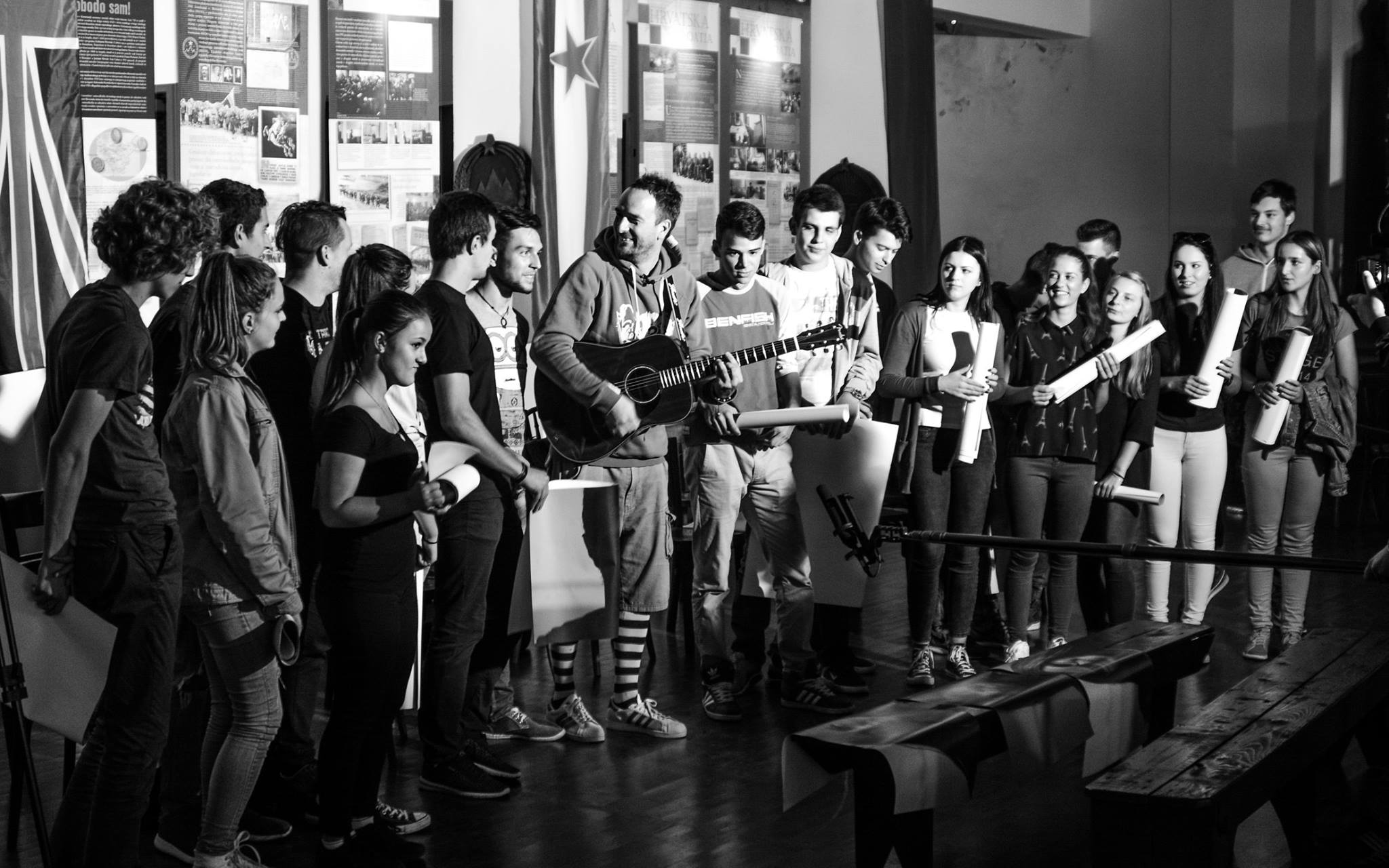
The European Commission says that 19% of youth are not interested in politics, the same number states their vote will not change anything, 17% do not believe in the political system, and 16% are not attracted to any party. This amount of mistrust in institutions and parties is much higher at the local level than at the European level. Perhaps that is why, during a recent recording of Perspektiva, one question resonated with the participants: What would you change if you could?
“The very fact that we all stopped for a second and that we all don’t know what exactly to say, in my opinion, shows that there is room for change and improvement in everything and anything.”
https://www.youtube.com/watch?v=0OGe52lC-vI
“When we turn on any show, or news, or news program, or whatever, they talk about differences or, even worse lately, about people’s private lives. Who lives how, who has what, who is whose godfather, who is whose friend. I think that creates a sense of disgust in all of us.”
https://www.youtube.com/watch?v=0OGe52lC-vI
“We have built a kind of wall against all of that, and we’re afraid to start talking about these issues, mostly because of fear and shame!”
https://www.youtube.com/watch?v=0OGe52lC-vI
As many as 77% of young people in Serbia do not trust political leaders or parties. In Bosnia and Herzegovina, that figure is 48.1%. According to Melina, it was precisely this deep distrust in Serbia that sparked the protests.
“We have been living in a state of quiet revolt for years. The protests happened because, quite simply, the last drop made the cup overflow.”
https://www.youtube.com/watch?v=nck8d61LXK4
“I believe that the majority of us are afraid that change is impossible. In this regard, I can say that we are just as afraid of politicians as we are of the policies they plan to implement or have already implemented, and against which we are fighting.”
https://www.youtube.com/watch?v=nck8d61LXK4
In Serbia, young people are concerned that change will not happen; 48% of youth in Bosnia and Herzegovina do not believe that the protest can change anything. They are overcome by the syndrome of “learned helplessness”. Party affiliation shapes opportunities, while schools and other institutions are perceived to be under political influence. As a result, many young people choose not to confront problems within the system, but to leave it altogether.