


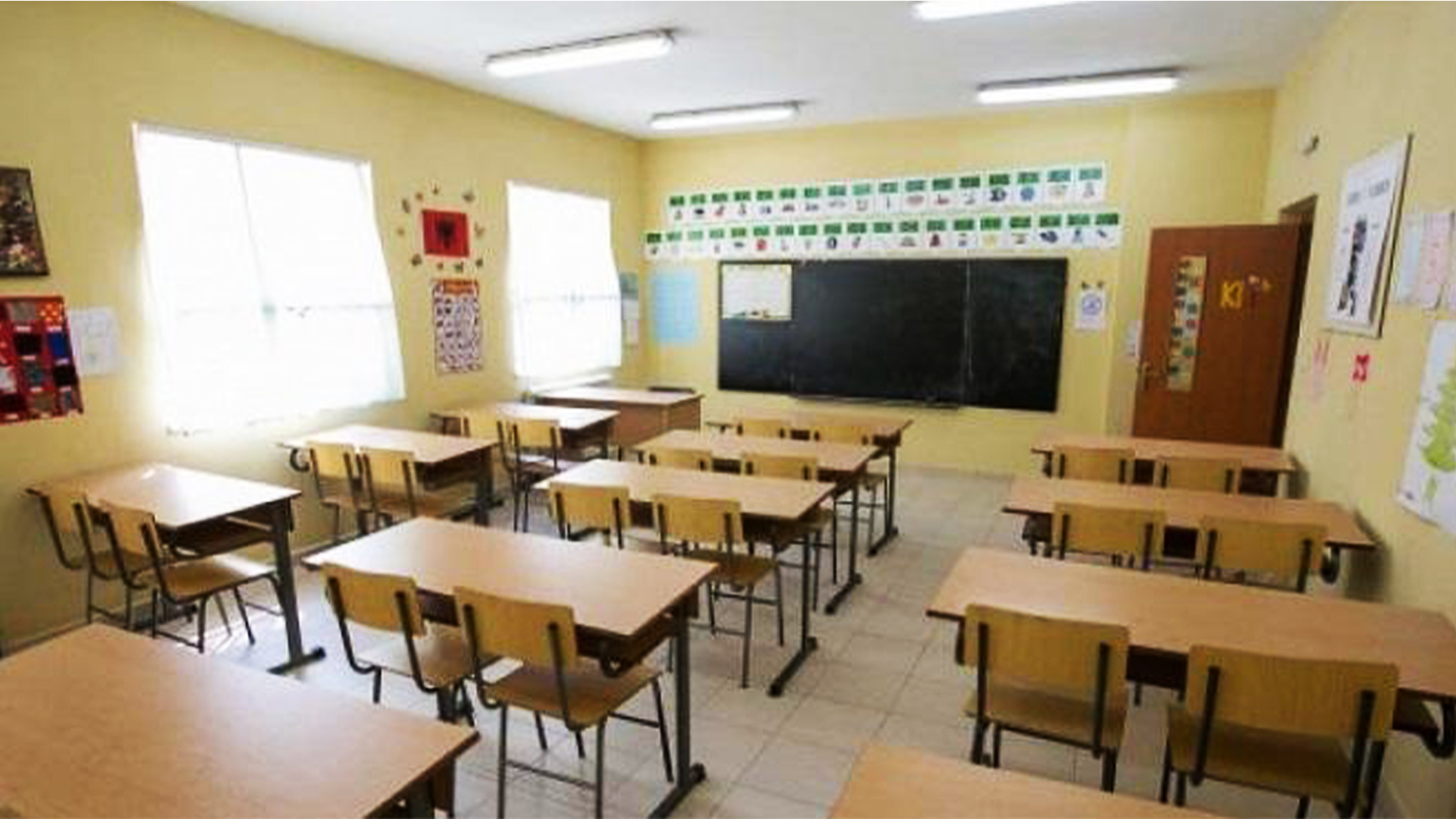
A classroom in Prishtina
Great events are not always needed to divide a society. Sometimes, a small change in a school timetable is enough. A school bell ringing half an hour earlier – a decision that at first glance seems purely technical ends up igniting a full-blown debate about religion, the state, identity, and even the future of society, flowing into TV studios, social media, and dinner tables.
Because in the Balkans, even minor issues become reflections of much larger dilemmas, mirroring the divisions quietly living beneath the surface.
What actually happened?
At the start of Ramadan, the Directorate of Education in Pristina adjusted school schedules. Classes would start earlier, around 7:30 instead of 8:00, so the school day could end sooner. Lessons stayed the same length, breaks were shortened.
A small change. Or something much bigger?
Some saw it as a gesture of understanding. Many students and teachers fast, and a shorter day could help.
Others saw something else entirely.
And it became a much deeper issue centering on whether public institutions should adapt to religious practices. Not all students fast. Not all belong to the same faith. And a familiar conflict unfolds: tradition vs. neutrality, custom vs. constitutional principle.
But the real question isn’t who is right. It’s whether we are as modern a society as we claim to be.
A debate that reveals what words conceal
Kosovo is a place where religion quietly shapes daily life, but also a state built on secular principles. When these realities collide, tension is inevitable.
And the reactions? Harsh, immediate, unforgiving.
Critics warned of threats to identity, education, even national security. Supporters fired back with accusations of Islamophobia and denial of religious rights. The tone on both sides escalated quickly, from argument to insult.
Aulona Mehmeti, a former civil society activist, wrote: “What Serbian academics like Vaso Čubrilović, who drafted projects aimed at gradually weakening our social, identity, and institutional structure, failed to achieve, we are now doing to ourselves.” Philosophy professor, Blerim Latifi, warned: “Yes, this is exactly how it begins: with small things that at first glance seem harmless—like adapting the schedules of public schools to the timing of religious rituals. Then, slowly and quietly, it moves toward adapting state laws to the demands of religious dogma, until one day, before you realize it, an ayatollah appears at the head of the state. On the other hand, commentator Lirim Mehmetaj stated: “A secular state respects religions; it does not deny them. You fools! Kosova is a paradox in itself. The only country in the world with pronounced Islamophobia, even though nearly 100% of its population is Muslim.”
But let’s be honest: no one truly cares about 7:30 vs. 8:00 for one month.
The frustration is about something deeper – how society organizes public life, how institutions make decisions, and how young people learn to understand the relationship between religion and the state.
Because if the argument is based purely on majority, then it should still hold even if that majority became a minority.
And that’s where things get complicated.
Immaturity, intolerance, and noise
What pushed me to write this isn’t the decision, it’s the reaction.
The anger. The labeling. The complete lack of willingness to listen.
Disagreement is normal. It’s necessary. But what we saw wasn’t a debate. It was noise. Insults replaced arguments. Different opinions were treated as attacks. Even education experts were dismissed with hostility.
Societies that debate are societies that think.
Societies that insult, label, and divide? Not so much.
What’s worrying isn’t disagreement—it’s the inability to tolerate it. A space where every opposing view is seen as provocation is not a space where democracy can function, even imperfectly.
The bigger picture
In another municipality, women working in public institutions were allowed to leave early – so they could prepare iftar.
A small decision, again. But also a clear example of something bigger: the normalization of gender roles, reinforced by institutions themselves.
Not new. But still worth calling out.
The real irony
The biggest irony isn’t that we argue.
It’s that we don’t—at least not about the things that actually matter.
There is no collective outrage over the quality of education. No storms over PISA rankings, reading levels, or violence in schools. No real debate about the generation shaping this country’s future.
But change a school schedule?
Suddenly, everyone is an expert.
Everyone has an opinion.
Everyone has something to say.
And yet, what we get isn’t debate – it’s resentment and division.
Written by: Hanmie Lohaj