

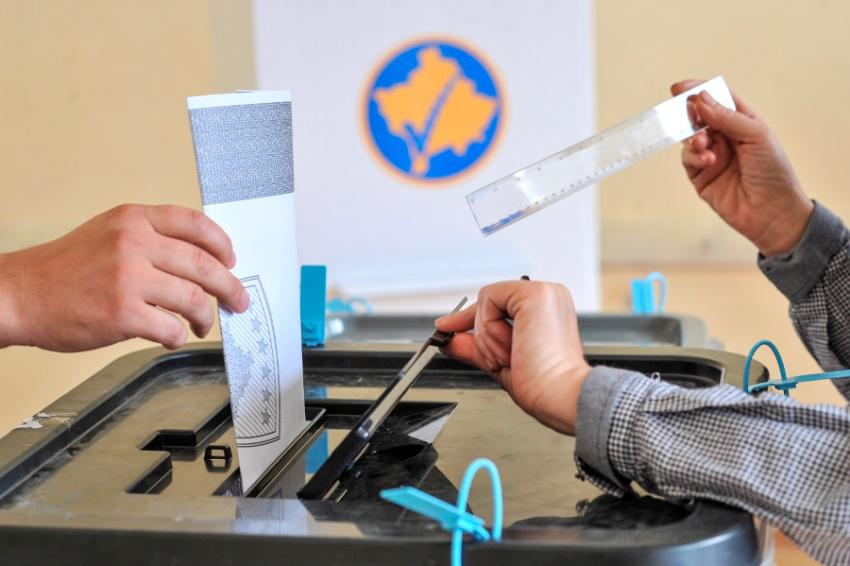
The Diaspora’s Role in Recent Elections
Kosovo entered the new year with the old prime minister. Albin Kurti achieved the biggest electoral victory of his career so far in the national elections held on December 28 of the year we left behind. He won no less than 51.11% of the vote, securing a second plebiscitary victory and rising by more than 9% compared to the February elections. During the period between these two elections—around 11 months—Kosovo was gripped by an institutional crisis, left without fully formed institutions due to a lack of party cooperation.
Such a large victory for Albin Kurti and his party, some would argue, was not fully foreseeable or expected, even by Kurti himself. That said, the results were however not a complete shock. The election date was set for December 28, a decision approved by Kosovo’s president, Vjosa Osmani. Opposition parties openly expressed their dissatisfaction with this decision, stating that they had preferred the elections to be held a few days earlier. And if one wonders what difference a few days could make, the answer is straightforward: Diaspora arrivals in Kosovo reach their peak in the final days of December, with many returning home for the end-of-year holidays. For several years now, the diaspora has been known to overwhelmingly favor Kurti in terms of political support. The outcome of the elections strengthened Kurti’s position, while opposition parties emerged noticeably weaker. Before the results were announced, criticism had centered on Kurti, his government, and its performance. Once the votes began to be counted, the narrative shifted decisively, with the focus turning to the opposition’s inability – collectively and individually – to offer a credible alternative, effectively clearing Kurti’s path to an uncontested victory.
In Prishtina, Perspektiva Plus gathered the perspectives of young people on Albin Kurti’s landslide victory and the unprecedented involvement of the diaspora in Kosovo’s most consequential national elections.
Flora Krivanjeva, a 19-year-old computer science student in Prishtina, said she does not feel young people are adequately represented in the Assembly of Kosovo.

“I don’t think there are enough young MPs or youth representatives in the Assembly. There weren’t many before either, but especially in the most recent elections, the lists that included young candidates were reduced. The trend has leaned more toward older MPs serving two or three terms by now. So no, I don’t think we are sufficiently represented, nor do I think our needs are adequately represented in the Assembly,” Flora told Perspektiva Plus.
Regarding how Flora views the outcome of these elections, she said:
“I think the results were very clear, as I said earlier. They show that the majority of Kosovo’s population and those living abroad share the same political stance. I don’t know how positive this result will be for us, but for the political subject and for procedures to move forward, I believe it will be positive because it can help push ahead everything related to the ratification of foreign agreements,” Flora said, and added that in any case, the swift formation of institutions following such a long political deadlock will be a positive development .
Ever since the election was called, public debate has focused on whether the diaspora should have the right to vote, given that they live abroad, visit Kosovo for only a week or ten days a year, and are not the ones living through the country’s everyday challenges.
On this issue, Ana Mustafa, a 19-year-old born and raised in Presheva who moved to Kosovo a year ago, said that:

“Those who best understand and can properly assess Kosovo’s political landscape are Kosovars themselves—those born and raised here, employed and educated here, involved and engaged in Kosovo and only Kosovo. They are rooted in the local reality, and therefore they are the most entitled to decide who should lead them, how, and why. We know that the diaspora voted in significant numbers, and that this noticeably contributed to the victory of a party that may be considered more ‘populist.’ While the diaspora should be highly valued as an inexhaustible source of support and effort to improve the country, I believe they should have their own representation—but they should not be the ones determining the winner here. At the end of the day, members of the diaspora return to their own infrastructure and their own jobs, while those who remain are the ones who continuously experience Kosovo’s education system, political system, and daily life—without pause, without compromise, and without rest. It is precisely their voices that should be heard in the highest proportion”.
Brigita Krasniqi, a young woman from Kosovo who was born and raised in Finland and is currently studying in Brussels, as a member of the diaspora herself, speaking to Perspektiva Plus in Brussels said that she has mixed feelings about this matter.

“On the one hand, I believe the diaspora certainly should have the right to vote—especially given that Kosovo’s diaspora is such a significant part of the country—and at the same time, I understand those who oppose it. For example, I think the generation of my parents, who were born in Kosovo, should definitely have the right to vote. But there are also people like me, who were born and raised in Finland and visit Kosovo once a year, who perhaps should not vote. This time I did not vote; last time I did. Still, I don’t believe this debate about whether the diaspora should or should not vote serves any real purpose, because it creates division. The myth that the entire diaspora supports Vetëvendosje is not true. Even within my own family, there are very different opinions. I think the diaspora is being used by opposition parties as a political weapon against Vetëvendosje. People have the right to vote—and to vote for whomever they want—without being accused for it. Otherwise, it is not healthy democracy”.
Brigita Krasniqi, Kosovo diaspora youngster studying in Brussels
Written by: Hanmie Lohaj